
Every change is read by an agent that didn’t write it
Before a change reaches you, a separate reviewer reads the diff, checks it against the ticket and leaves a verdict in words. If it doesn’t hold, the change goes back to the same ticket — with the verdict attached.
Give the reports page any date window #482
main from reports-window· linked to ticket AC-214Files
Reviewers
What the review checks
One real round, as it happened
A change from our own work: a new endpoint in one repository, the command that reads it in another — one ticket. Its history, lightly shortened.
Add a command that lists local agent containers with their live status
Ready to buildPull requests
The fix went to the existing branch — no new pull request, nothing to re-read from zero.
One ticket, every repository it touches
A change across the web app and the API is one ticket with a pull request in each. It is done when all of them are — nobody syncs statuses by hand. Step through it.
Give the reports page any date window
| Repository | Pull request | Checks | State |
|---|---|---|---|
acme-web | #482reports-window → main · 2 files | 2 passed | |
acme-api | #219reports-window-params → main · 3 files | 3 passed |
When something doesn’t pass
Failure is part of the path, not an exception to it. Each case has a defined way out — pick one and read what the ticket records.
What one review catches, every later review knows
Findings don’t stay in one pull request. They become knowledge that the next agents read before they write or review.
Header and chart would disagree on any custom range.
Every widget on a report resolves its dates through the same window as the totals.
Read v5 before the first commit — built through the shared window, nothing to send back.
From the blog
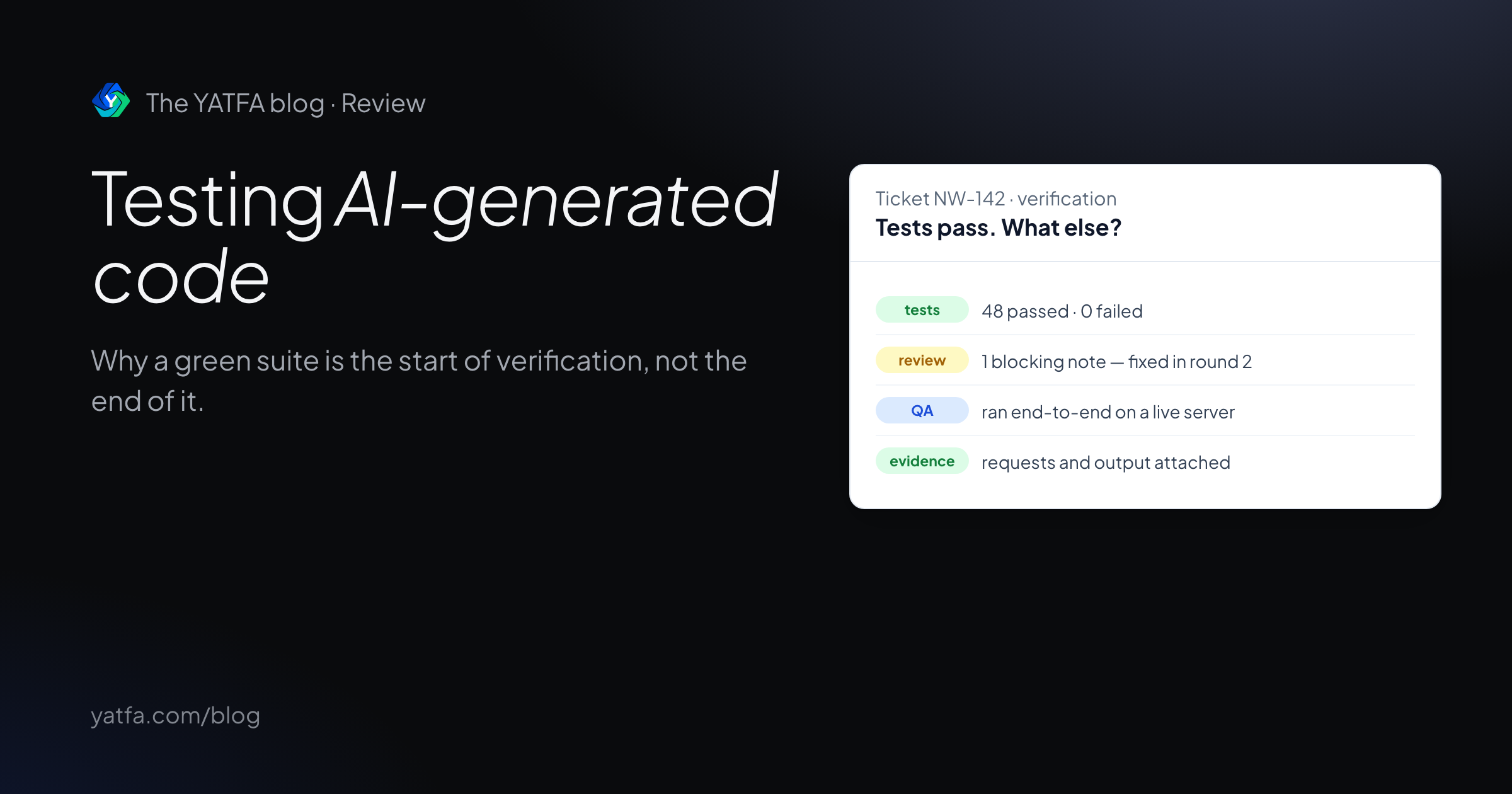
Testing AI-generated code: why green tests are not enough
Research on weak tests and false greens in AI coding benchmarks, what to verify beyond a passing suite, and a ticket where QA caught what specs missed.
Read the article →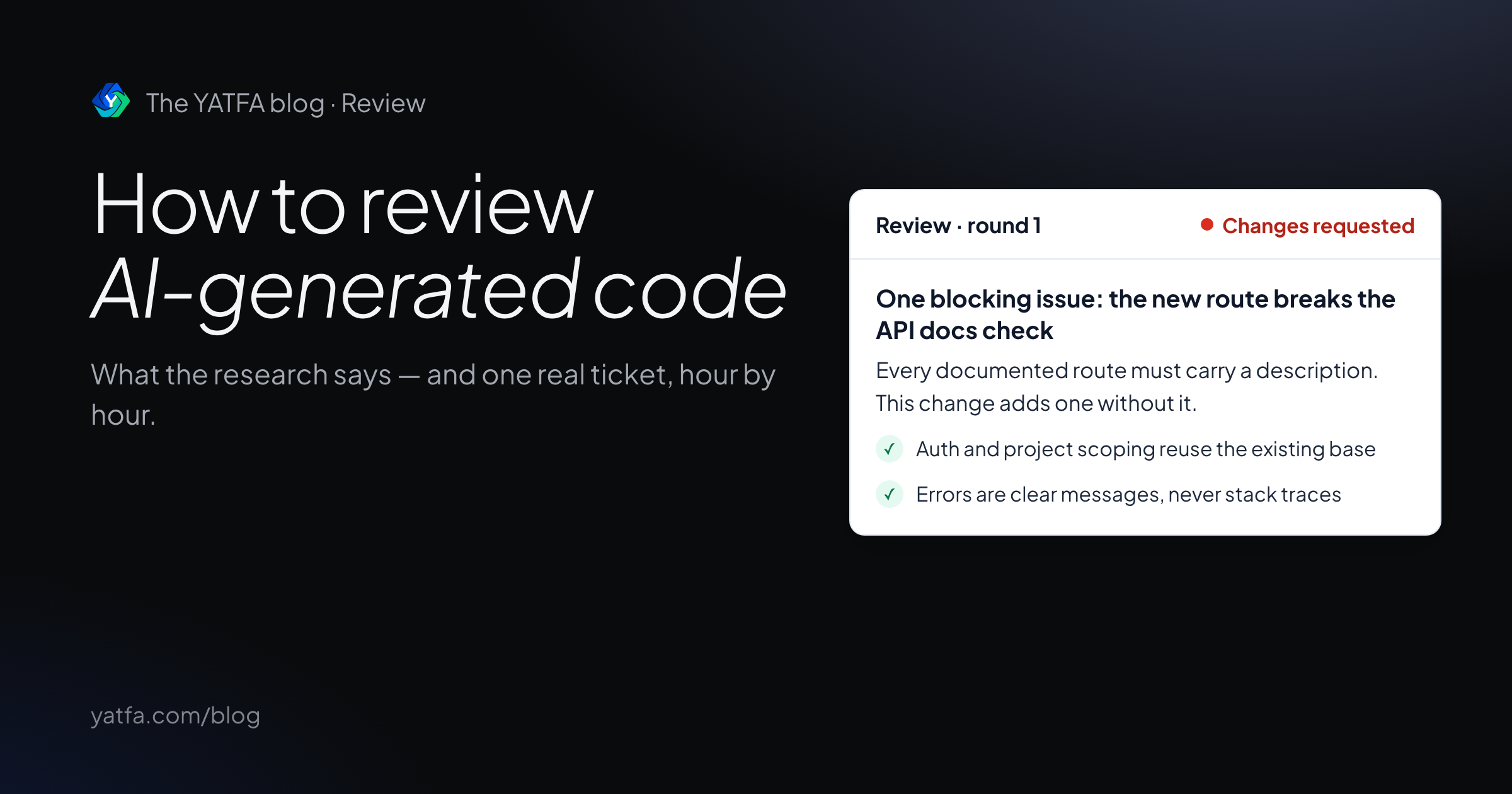
How to review AI-generated code
What five studies say about AI-written code, ten review practices with sources, a checklist, and one real ticket reviewed hour by hour.
Read the article →